
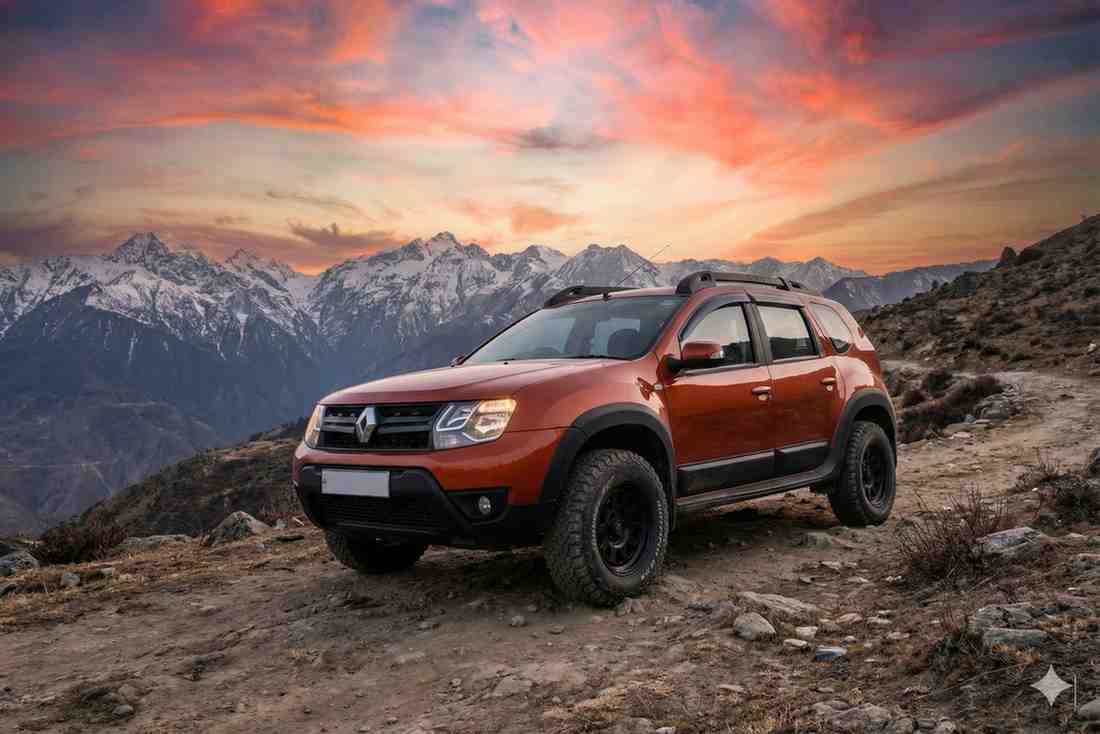
Few cars have left as lasting an impact on the Indian automotive landscape as the Renault Duster. When it first arrived on Indian shores in 2012, it didn’t just enter a segment; it effectively created one. It was the right product at the right time—a monocoque SUV that offered the ruggedness of a traditional off-roader with the comfort and driving dynamics of a sedan.
For nearly a decade, the Duster was the backbone of Renault’s operations in India. Yet, as competition intensified and consumer preferences shifted toward tech-laden, feature-rich cabins, the first-gen Duster began to show its age. Its discontinuation in 2022 marked the end of an era, leaving a significant void in Renault’s portfolio and the hearts of enthusiasts.
But the story isn’t over. The rumor mills are grinding, prototypes have been spotted globally, and Renault has officially confirmed the inevitable: The Duster is coming back to India.
This isn’t just a facelift; it is an entirely new generation, built from the ground up to reclaim its throne in the fiercely competitive mid-size SUV segment. This comprehensive guide explores the legacy of the Renault Duster in India, why it left, and everything we know about the highly anticipated 3rd Generation model set to hit our roads soon.
The Legacy: Why India Loved the Original Duster
To understand the hype surrounding the upcoming model, we must first understand why the original was so special.
Before the Hyundai Creta became a household name, the Duster was the definitive “compact SUV.” It brought a European flair combined with a robust build quality that seemed tailor-made for Indian road conditions.
The “Magic Carpet” Ride
The defining characteristic of the first-gen Duster was its suspension setup. It possessed an almost uncanny ability to flatten potholes and glide over rough terrain. While competitors felt stiff or bouncy, the Duster offered a ride quality that even cars segments above it couldn’t match. This made it a favorite for long-distance touring and rural driving.
The Diesel Powerhouse
India loved diesel SUVs, and Renault gave them a gem. The 1.5-liter K9K diesel engine was legendary. Available in different states of tune (85PS and 110PS), it was punchy, incredibly frugal, and famously reliable. The availability of an AWD (All-Wheel Drive) variant further cemented its reputation as a true “go-anywhere” vehicle, a feature sorely missed in most modern “soft-roaders.”
Rugged, No-Nonsense Design
The Duster didn’t try to be overly sleek. Its flared wheel arches, wide stance, and imposing grille gave it a butch, muscular road presence that appealed to buyers looking for a traditional SUV aesthetic without the bulk of a ladder-frame chassis.
The Great Indian Gap: Why was the Duster Discontinued?
If it was so popular, why did Renault stop selling it in 2022? The answer lies in the rapid evolution of the Indian automotive market.
By 2018-2019, the mid-size SUV segment had exploded. The Kia Seltos and the second-gen Hyundai Creta arrived, offering panoramic sunroofs, massive touchscreens, ventilated seats, and connected car technology. In comparison, the Duster’s interior felt drab, dated, and basic. The ergonomics were quirky, the touchscreen was poorly positioned, and it lacked the “wow factor” that modern buyers demanded.
Furthermore, the transition to stringent BS6 emission norms made small diesel engines economically unviable for many manufacturers. Renault decided to axe its diesel portfolio globally. While they introduced a fantastic 1.3-liter turbo-petrol engine, the lack of a diesel option in a segment that still preferred oil-burners hurt sales.
Ultimately, the first-gen Duster had run its course. Renault India needed a fresh start, not another facelift.
The Comeback: Enter the 3rd Generation Renault Duster
The wait is nearly over. The global unveil of the new Dacia Duster (Renault’s budget arm in Europe) has given us a crystal-clear look at what is coming to India. The new 3rd generation Renault Duster is a quantum leap forward in design, technology, and engineering.
Here is a detailed breakdown of what to expect from the upcoming India-spec Duster.
1. The Platform: Moving to the Modern Era
The biggest change is under the skin. The old B0 platform is gone. The new Duster is built on the modern, modular CMF-B architecture. This is the same platform that underpins globally successful cars like the Renault Clio and Captur.
This switch is crucial because it allows for:
- Better Safety: Enhanced structural rigidity to meet stricter crash test norms (like Bharat NCAP).
- Electrification: The CMF-B platform is designed to accommodate hybrid powertrains, which is central to Renault’s future strategy.
- Modern Tech: It supports advanced electronic architectures required for ADAS (Advanced Driver Assistance Systems) and modern infotainment.
2. Design Language: Boxy, Butch, and Bold
The new Duster has shed the curves of its predecessor for a much sharper, squarer look. It draws heavy inspiration from the “Bigster” concept shown a few years ago.
- Exterior: It features a flat bonnet, an upright nose, and slender Y-shaped LED DRLs that integrate into the grille. The profile is chunky with prominent cladding around the wheel arches (made from a new recycled material called ‘Starkle’), giving it a rugged, adventurous vibe. The rear also gets Y-shaped taillights, completing the modern look. It looks significantly more premium and imposing than before.
- Interior: The cabin is where the biggest revolution has happened. Gone is the utilitarian dashboard. The new interior is angular, modern, and tech-focused. Expect a large free-floating touchscreen infotainment system (likely 10.1 inches) angled toward the driver, and a fully digital instrument cluster. The materials will be a step up, though still durable rather than outright luxurious, keeping in line with the Duster’s ethos.
3. Engine Options: The Hybrid Revolution
This is a critical point for Indian buyers: There will likely be no diesel engine. Renault is firmly moving towards petrol and hybridization.
We expect three powertrain options for the India-spec Duster:
- 1.0-litre Turbo Petrol: A smaller capacity turbo engine, likely offered on lower variants, possibly with a factory-fitted CNG option later on.
- 1.2-litre Turbo Petrol Mild-Hybrid: A more powerful 3-cylinder engine paired with a 48V mild-hybrid system for better start-stop functionality and a slight torque assist. This will likely be available with both manual and automatic transmissions, and potentially a 4×4 hardware option.
- The Strong Hybrid (1.6-litre): To rival the Maruti Grand Vitara and Toyota Hyryder, Renault is expected to bring its robust 1.6-litre, 4-cylinder petrol engine paired with two electric motors and a 1.2 kWh battery. This “self-charging” hybrid will offer excellent fuel efficiency, which is the new battleground in this segment.
The return of the 4×4 option is highly anticipated. While most rivals are FWD only, the Duster has a heritage of off-roading capability that Renault will want to leverage.
4. Features and Technology: Catching Up
Renault knows it cannot launch a bare-bones car in India anymore. The new Duster will be loaded.
Expect features like:
- Panoramic sunroof (a segment mandatory).
- Ventilated front seats.
- Wireless charging and wireless Android Auto/Apple CarPlay.
- 360-degree camera.
- ADAS Level 2: This will include features like autonomous emergency braking, lane-keep assist, and adaptive cruise control, which are becoming standard in the segment.
The “Big” Surprise: The 7-Seater Duster
This is perhaps the most exciting development. Renault India is not just launching the standard 5-seater Duster. They are also working on a larger, longer three-row version based on the same platform.
Often referred to internally or colloquially as the “Bigster” (though the final production name might differ), this SUV will take on the likes of the Mahindra XUV700, Tata Safari, and Hyundai Alcazar.
The 7-seater Duster will share the same front design and mechanicals as the 5-seater but will feature a longer wheelbase and a larger rear overhang to accommodate the third row of seats. This dual-SUV strategy will allow Renault to cover a much wider price bracket, from Rs 10 lakh to Rs 25 lakh.
Launch Timeline and Expected Price
Renault India has confirmed a massive investment plan for the country, which includes new SUVs.
- Launch Timeline: The new 5-seater Renault Duster is expected to hit Indian showrooms by late 2024 or early 2025. The 7-seater version will likely follow 6-12 months later.
- Expected Price: Given the new platform, advanced tech, and hybrid powertrains, the new Duster will not be a budget offering like the original initially was. Expect prices to start around Rs 10.5 lakh (ex-showroom) for the base petrol and go up to Rs 19-20 lakh for the top-spec strong hybrid 4×4 variants.
The Competitive Landscape
When the original Duster launched, it had almost no competition. The new Duster, however, is entering a war zone.
It will lock horns with:
- Hyundai Creta & Kia Seltos: The segment leaders, known for features and multiple engine choices.
- Maruti Grand Vitara & Toyota Hyryder: The fuel-efficiency champions thanks to their strong hybrid tech.
- Honda Elevate, VW Taigun & Skoda Kushaq: The driving enthusiast’s choices with great petrol engines.
To succeed, the new Duster needs to find its niche. It must leverage its rugged image, offer the coveted 4×4 option that most rivals lack, and match the Japanese duo on hybrid fuel efficiency, while matching the Koreans on features.
Conclusion: The Icon Reborn?
The return of the Renault Duster to India is more than just another car launch; it’s a revival of a nameplate that holds immense nostalgia. Renault seems to have learned from the past decade. The move to the modern CMF-B platform, the adoption of hybrid technology, and the complete overhaul of the design and interior suggest they are serious about reclaiming lost ground.
If Renault can price the new Duster aggressively and ensure its legendary ride quality remains intact, they won’t just have a competitor on their hands—they might just have another winner that redefines the segment all over again. The king is preparing to return, and the battle for the mid-size SUV crown is about to get a lot more interesting.
Frequently Asked Questions (FAQ) about Renault Duster India
Q1. Is the Renault Duster coming back to India?
A. Yes, Renault has confirmed that the all-new 3rd Generation Duster will be launched in India as part of their new product offensive.
Q2. When will the new Renault Duster launch in India?
A. While official dates aren’t out, the new 5-seater Duster is expected to launch in India by late 2024 or early 2025.
Q3. Will the new Renault Duster have a diesel engine?
A. It is highly unlikely. Renault globally is moving away from diesel. The new India-spec Duster will likely focus on turbo-petrol and strong hybrid powertrain options.
Q4. Will the new Duster come in a 7-seater version?
A. Yes, reports indicate that Renault is developing a three-row, 7-seater version of the new Duster (often referred to as the Bigster) to rival the Mahindra XUV700 and Tata Safari. It will launch after the 5-seater version.
Q5. Will the new Duster get 4×4 or AWD?
A. Yes, the international specs of the new Duster include a 4×4 drivetrain option, and it is highly expected that Renault will bring this to India to differentiate it from rivals like the Creta and Seltos.
Q6. What will be the price of the new Renault Duster in India?
A. Prices are expected to start around Rs 10.5 lakh to Rs 11 lakh (ex-showroom) and could go up to Rs 20 lakh for top-end hybrid or 4×4 variants.
Disclaimer
The information provided in this article regarding the upcoming Renault Duster’s features, specifications, launch timelines, and pricing is based on global reveals of the Dacia Duster, industry reports, and speculative analysis. Final India-specific details may vary upon official announcement by Renault India. Prices mentioned are estimates and subject to change.